
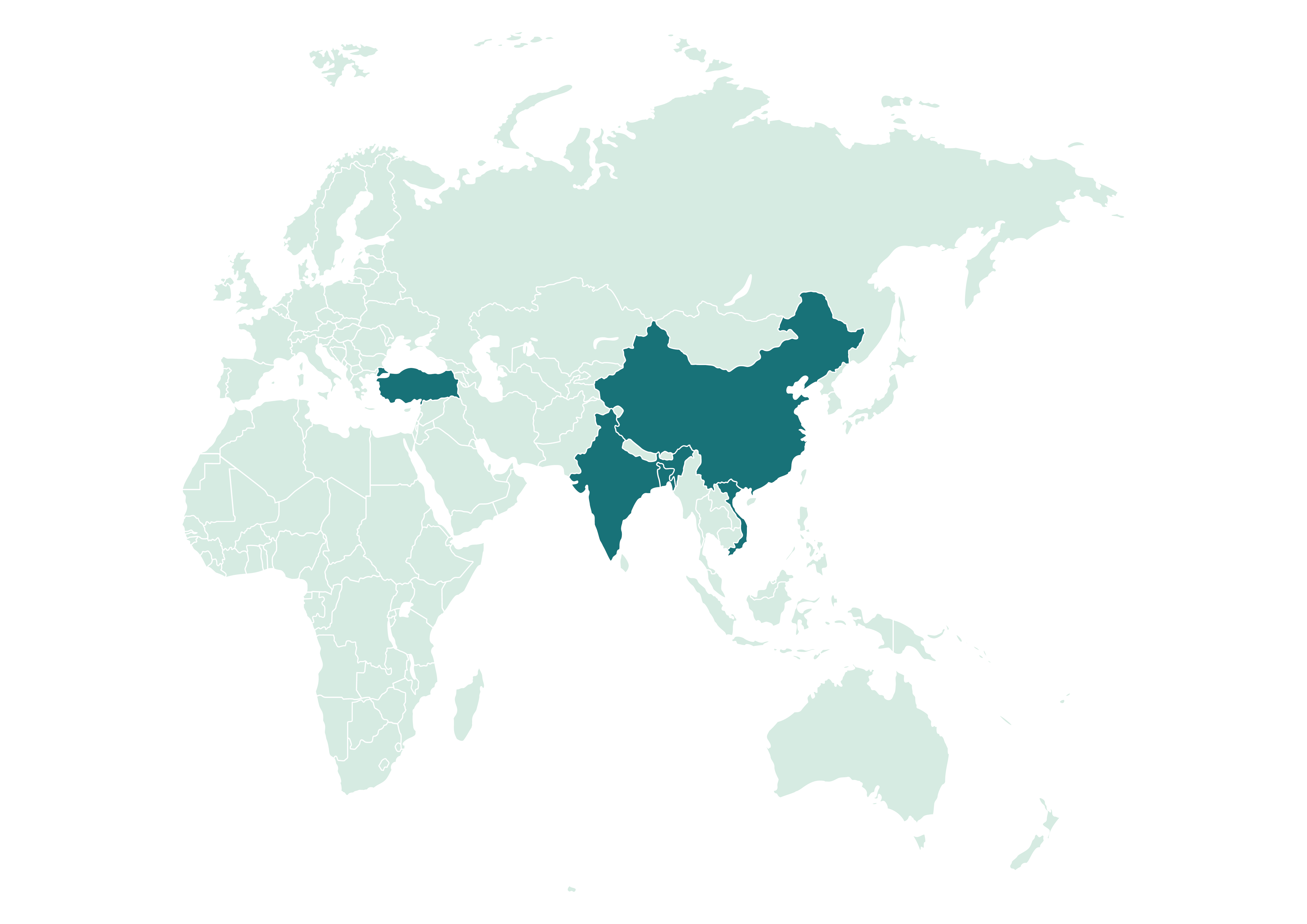
Our Production Sites
The importance of supply chain transparency is steadily increasing due to new legislation, such as the German Supply Chain Due Diligence Act (LkSG), the adopted EU Corporate Sustainability Due Diligence Directive, and the emerging reporting obligations under the Corporate Sustainability Reporting Directive (CSRD). Textile companies, which according to the European Commission operate in a high‑risk sector, bear a particular responsibility.
Transparency within the supply chain enables us to trace the origin of our products and to ensure that social and environmental standards are upheld. There are various challenges associated with creating transparency in supply chains. The complexity and diversity of supply chains, particularly in the textile industry, can make traceability more difficult. Continuous efforts help to ensure that all partners along the supply chain meet our standards.
Increasing transparency within the company’s own supply chain represents the first step in risk management.
Lisa-Marie Dozier, Head of CSR Management
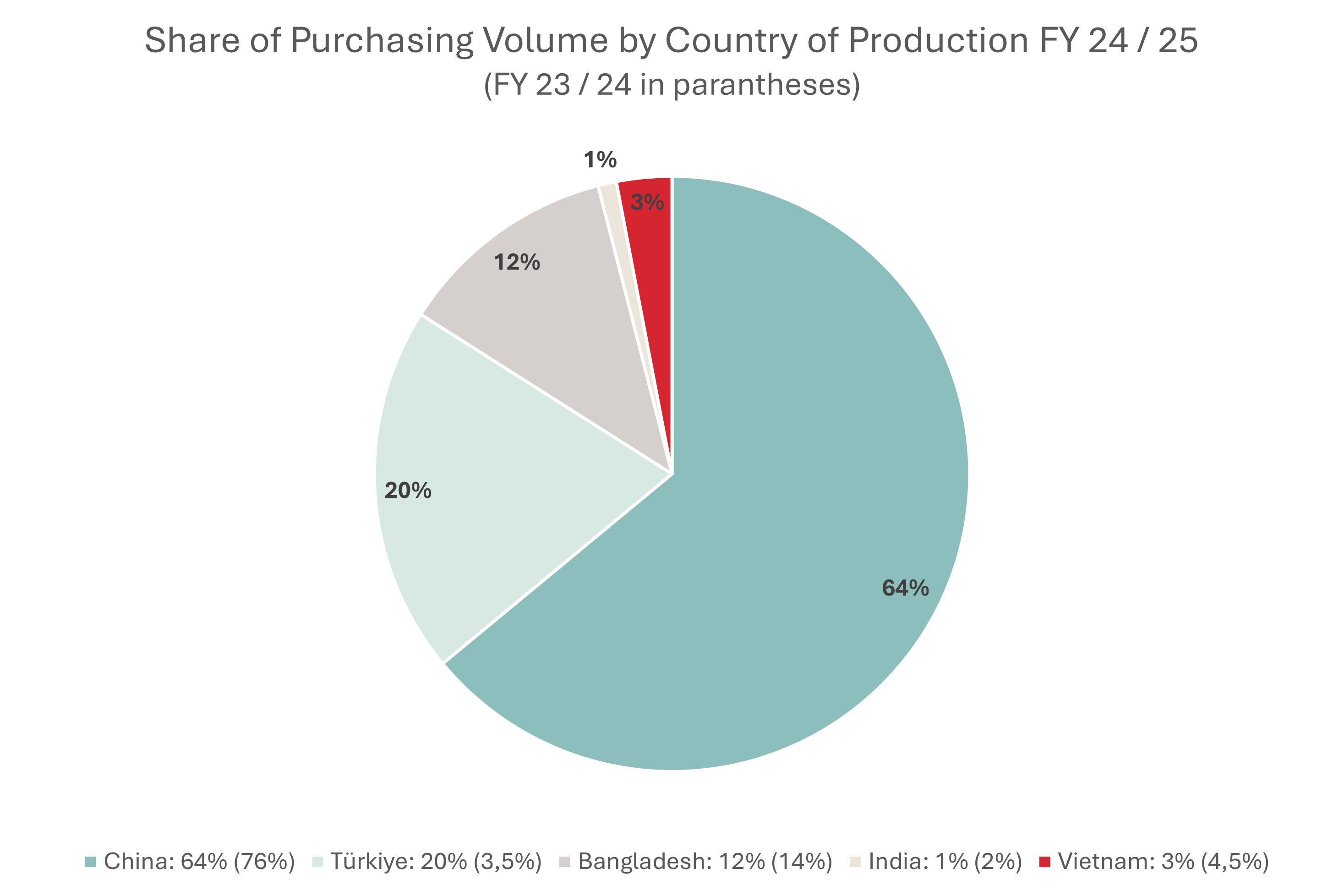
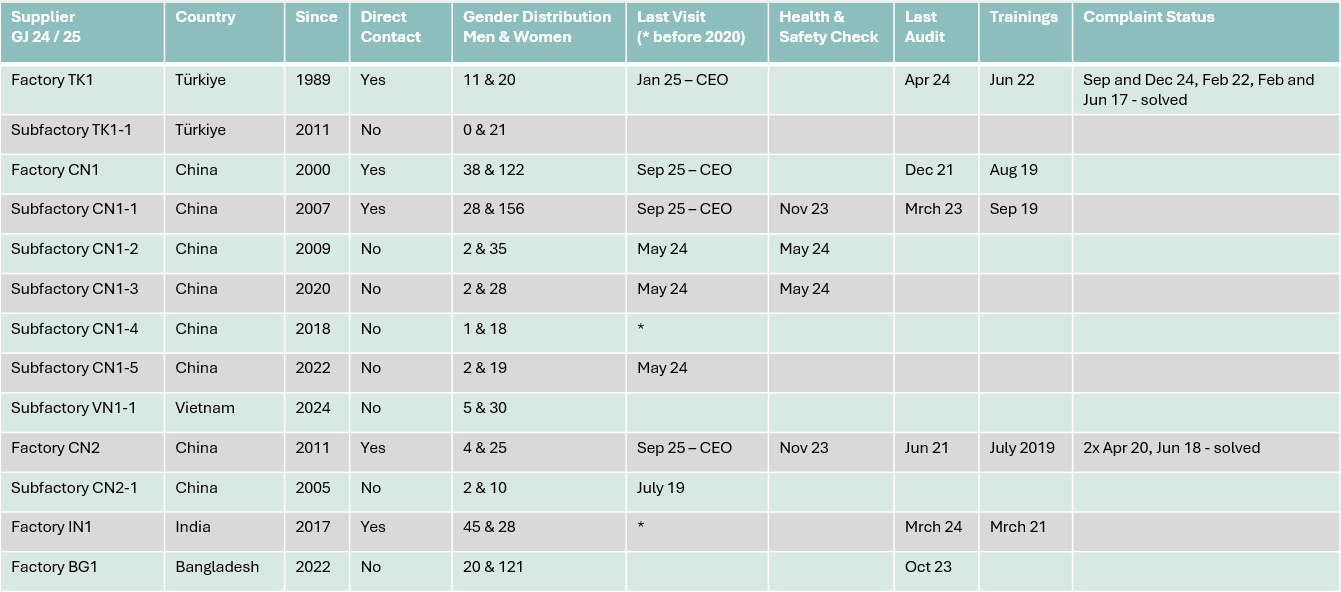
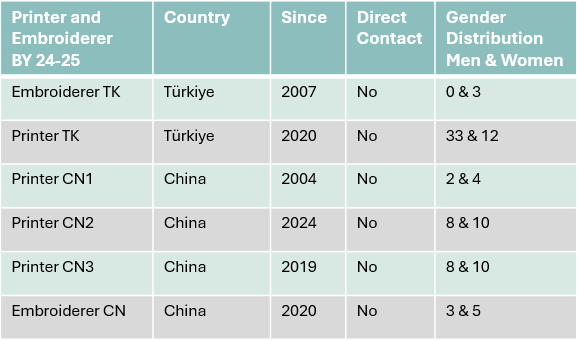
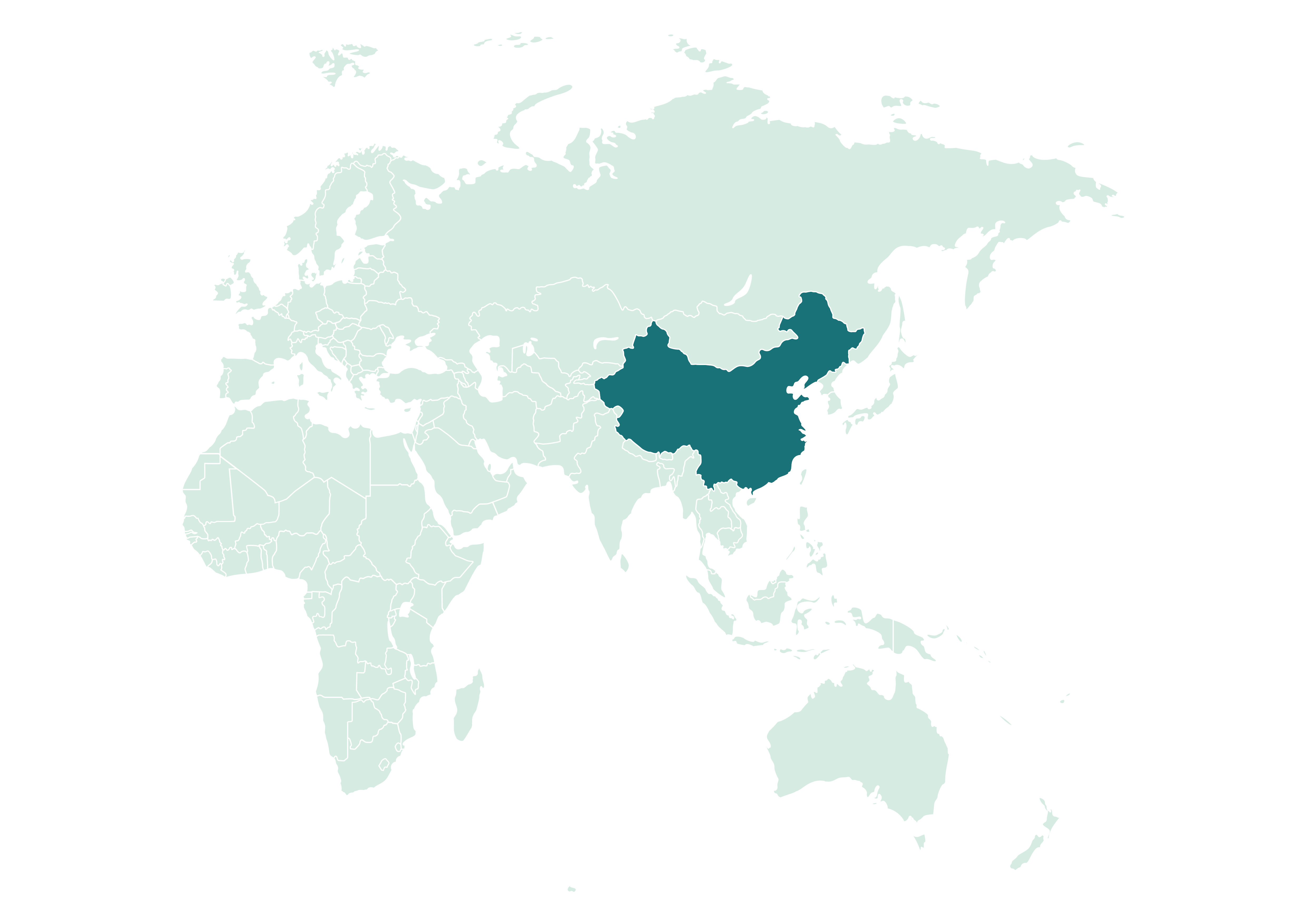
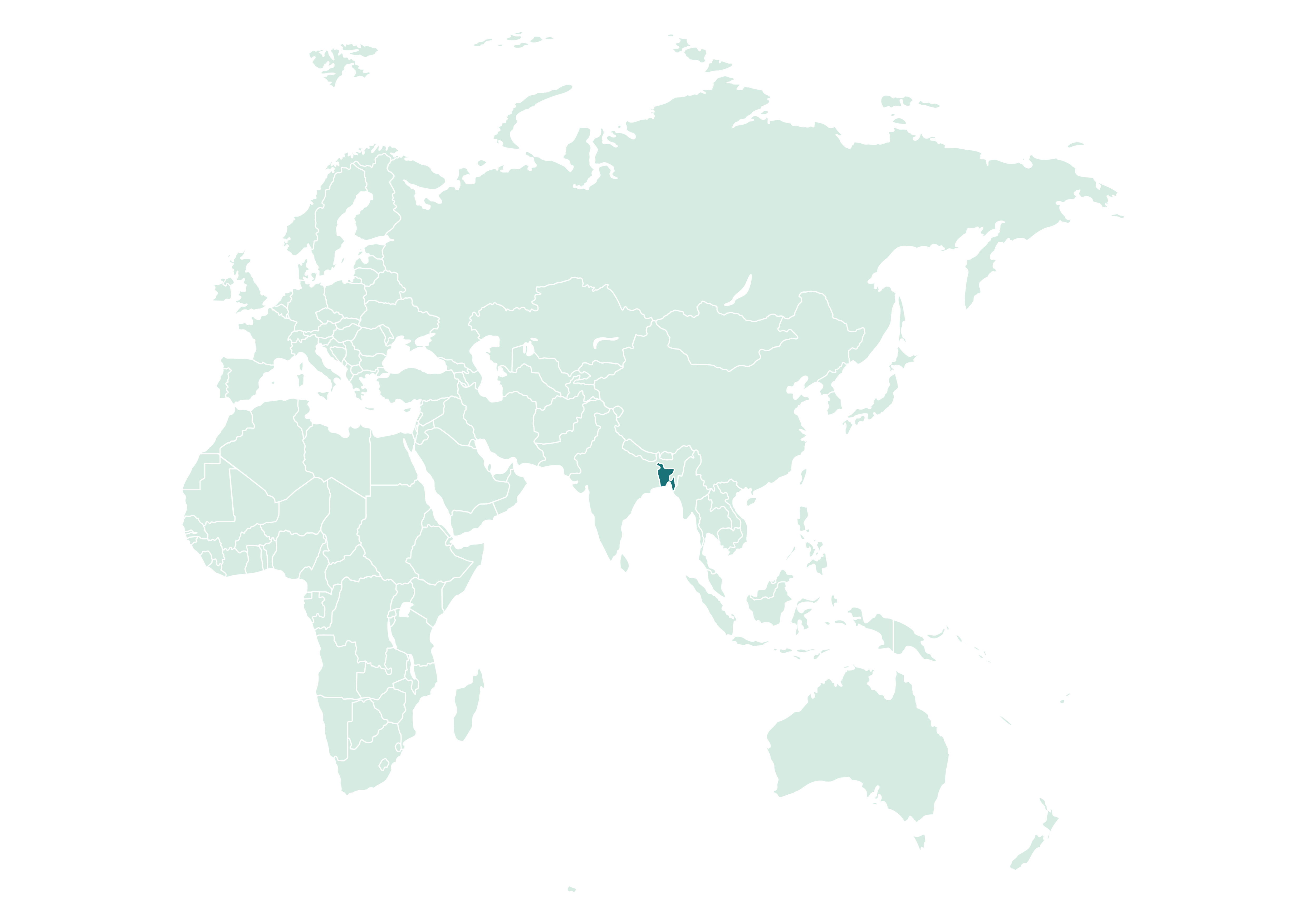
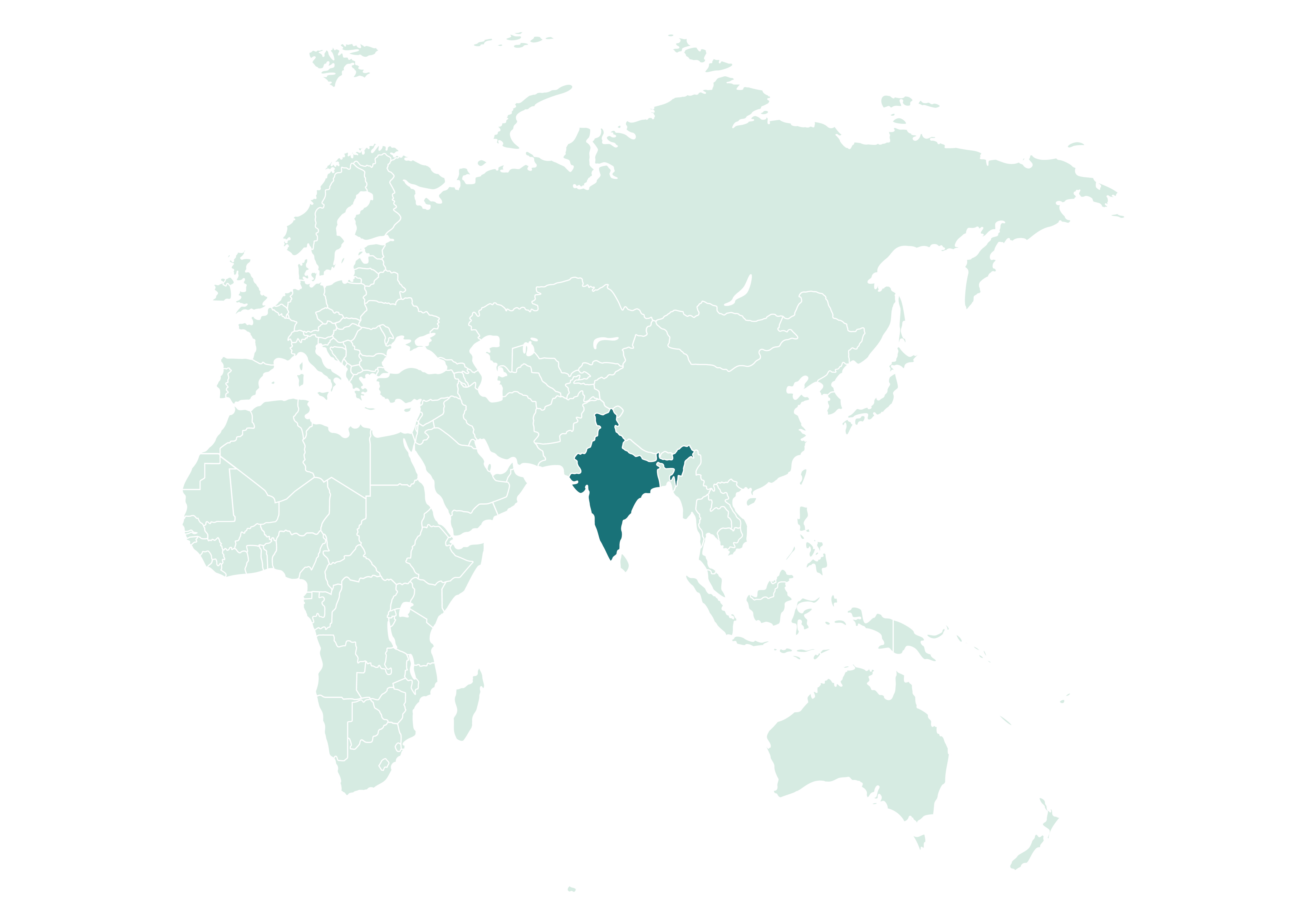
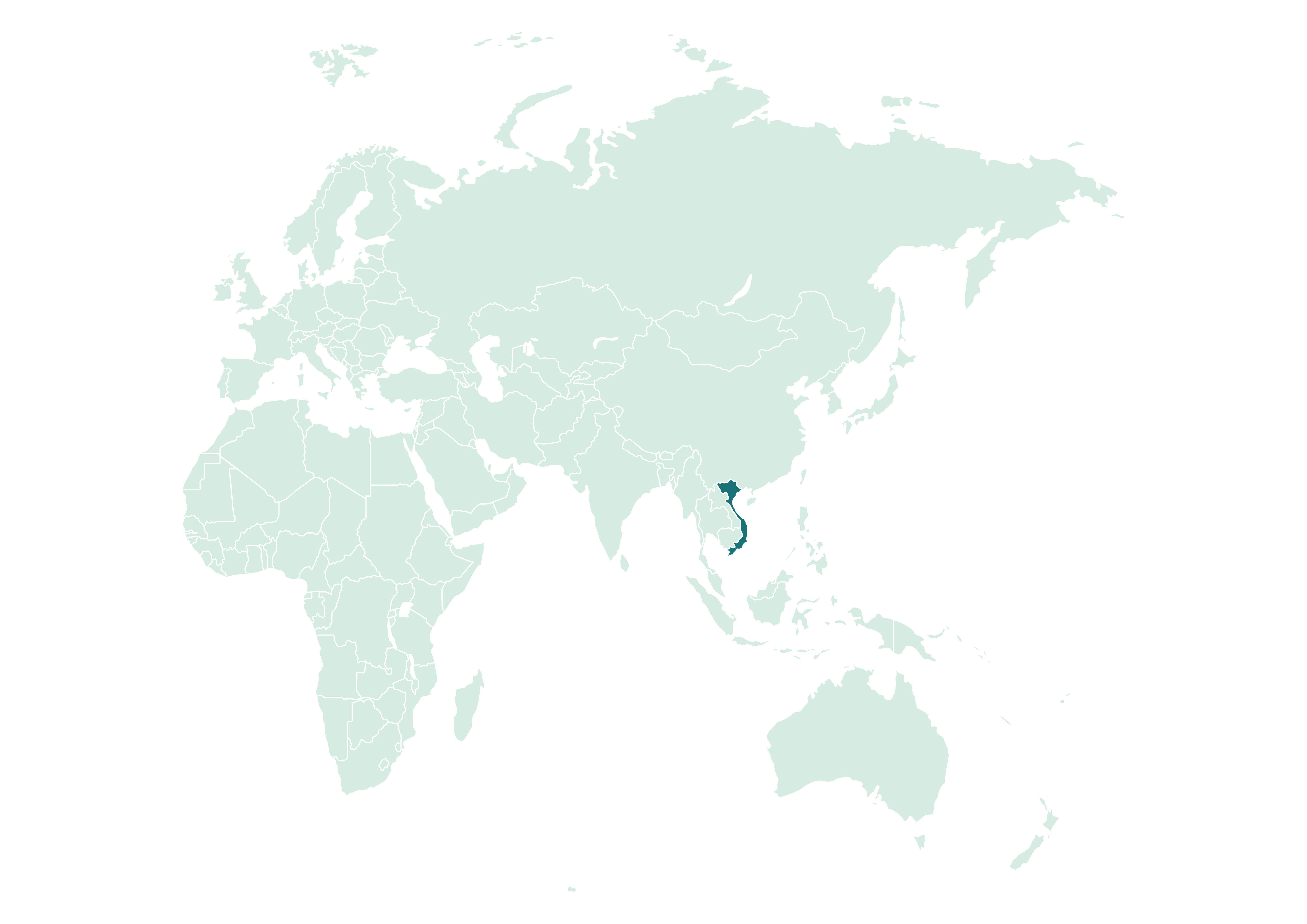
Overview of our factories, embroidery facilities, and print shops
The following tables provide further information about our factories, embroidery facilities, and print shops, including how long we have been working with them, the ratio of female to male employees, and an overview of the audits conducted and factory visits carried out.
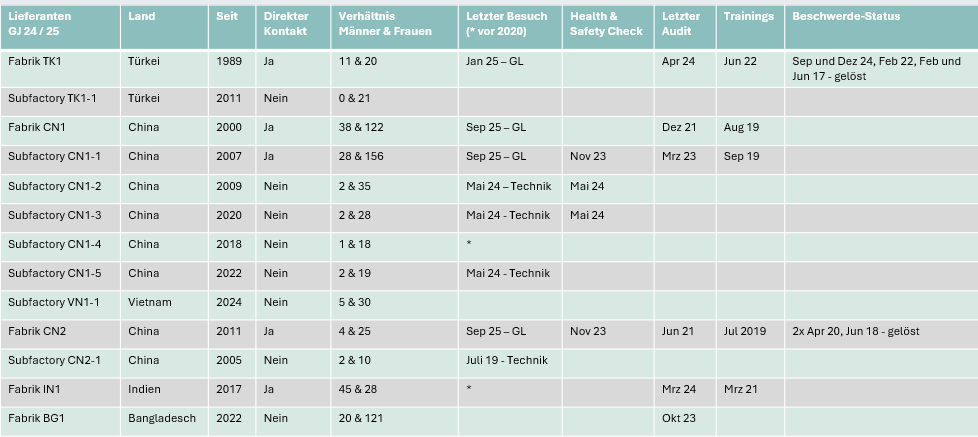
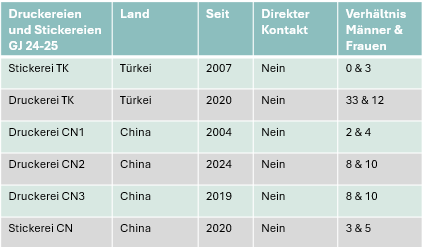
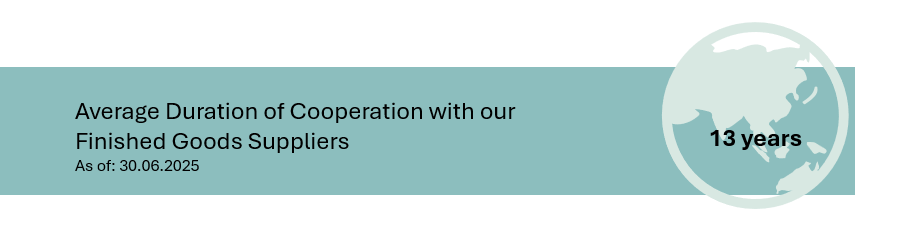
Average length of cooperation with our finished goods suppliers
We maintain long‑standing relationships with our finished goods suppliers, as it is important to us to work in partnership on an equal footing.
Transpareny in the deeper supply chain
We are committed to further increasing supply chain transparency and to identifying suppliers in the deeper value chain. By actively informing our partners about our social standards and working closely with them, we contribute to building a responsible supply chain and strengthening customer trust. In addition, we have systematically identified our direct Tier 2 suppliers and committed them to shared responsibility through the signing of our Supplier Code of Conduct. In this way, we are able to continuously increase transparency in our supply chain, both internally and for external stakeholders, and to specifically verify whether human rights and environmental protection requirements are being met.