

Since January 2024, Maier Sports GmbH has been subject to the German Supply Chain Due Diligence Act (LkSG). The purpose of this legislation is to contribute to the improvement of human rights conditions at an international level by requiring companies to assume responsibility for their supply chains and environmental impacts and to fulfil defined due diligence obligations. These obligations include, in particular, the implementation of a risk analysis and the establishment of an appropriate risk management system.
Our approach is guided by the principles of the OECD. The foundation is our Responsible Business Conduct framework, which defines our responsibilities in business relationships.
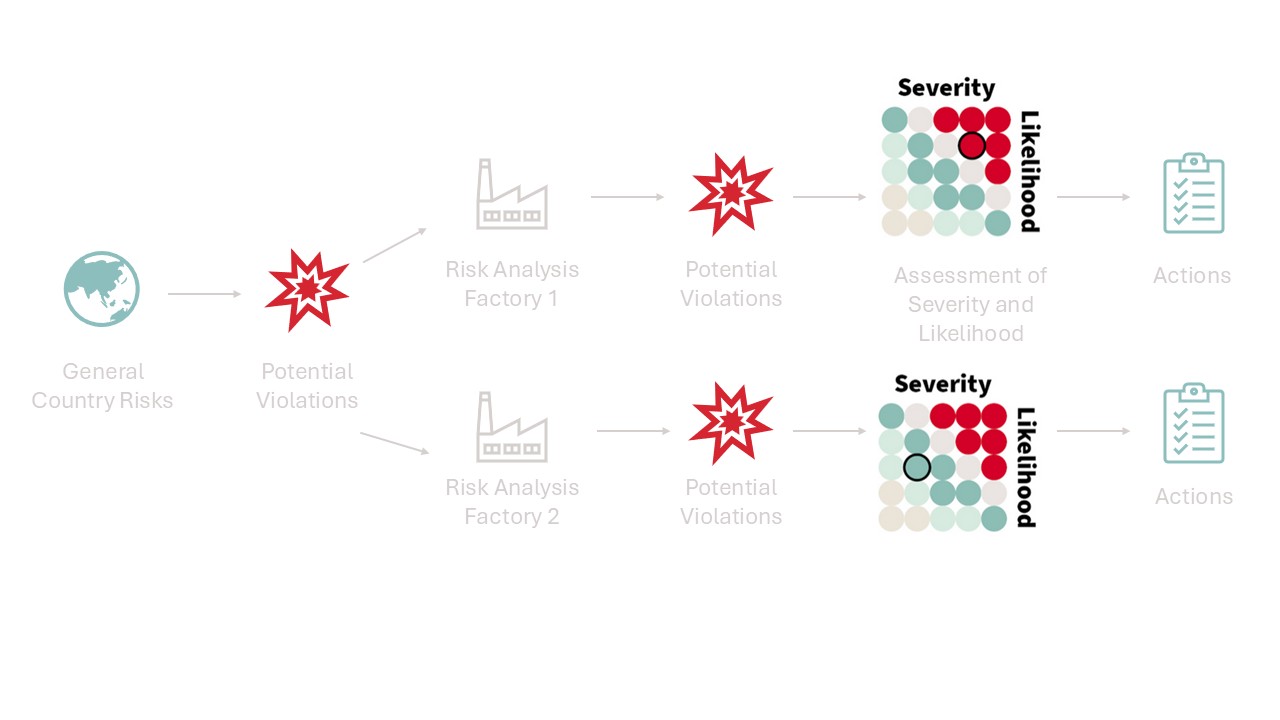
The next step is the risk analysis, which is described in detail below. Identified potential risks are subsequently addressed, prevented, or mitigated through actions taken by the company and its suppliers. These measures are tracked and communicated. In cases where actual adverse impacts have occurred, appropriate remediation measures are implemented.
The risk-based approach is a suitable methodology for us to identify common potential risks in our supply chain at an early stage.
Simone Mayer, CEO of Maier Sports GmbH
Risik Analysis
The assessment of our suppliers with regard to their compliance with environmental and social standards is therefore a central component of our (human rights) due diligence process. For this purpose, we have developed a company-specific methodology that is guided by the recommendations of the OECD, with the aim of identifying and minimising potential human rights risks within our supply chains.
Our approach:
1. Identification of the supplier, including master data, purchasing volume, and our share of the supplier’s total production
2. Initial assessment of production countries, based on the Sustainable Development Reports
3. Evaluation of country-specific production risks on a scale from 1 (very low) to 5 (very high)
4. Review of identified risk areas at country level in relation to our suppliers
5. Derivation of measures in cases where risks are identified at supplier level, in collaboration with the respective suppliers
Country-specific Risk Assessment for Finished Goods Suppliers in the Textile Sector
The assessment of potential risks at country level provides an indication of which risks are likely to occur in our production countries. Potential risks with a rating of at least 3 are therefore subject to further review by assessing the respective country-related risks across all relevant suppliers operating in that country.
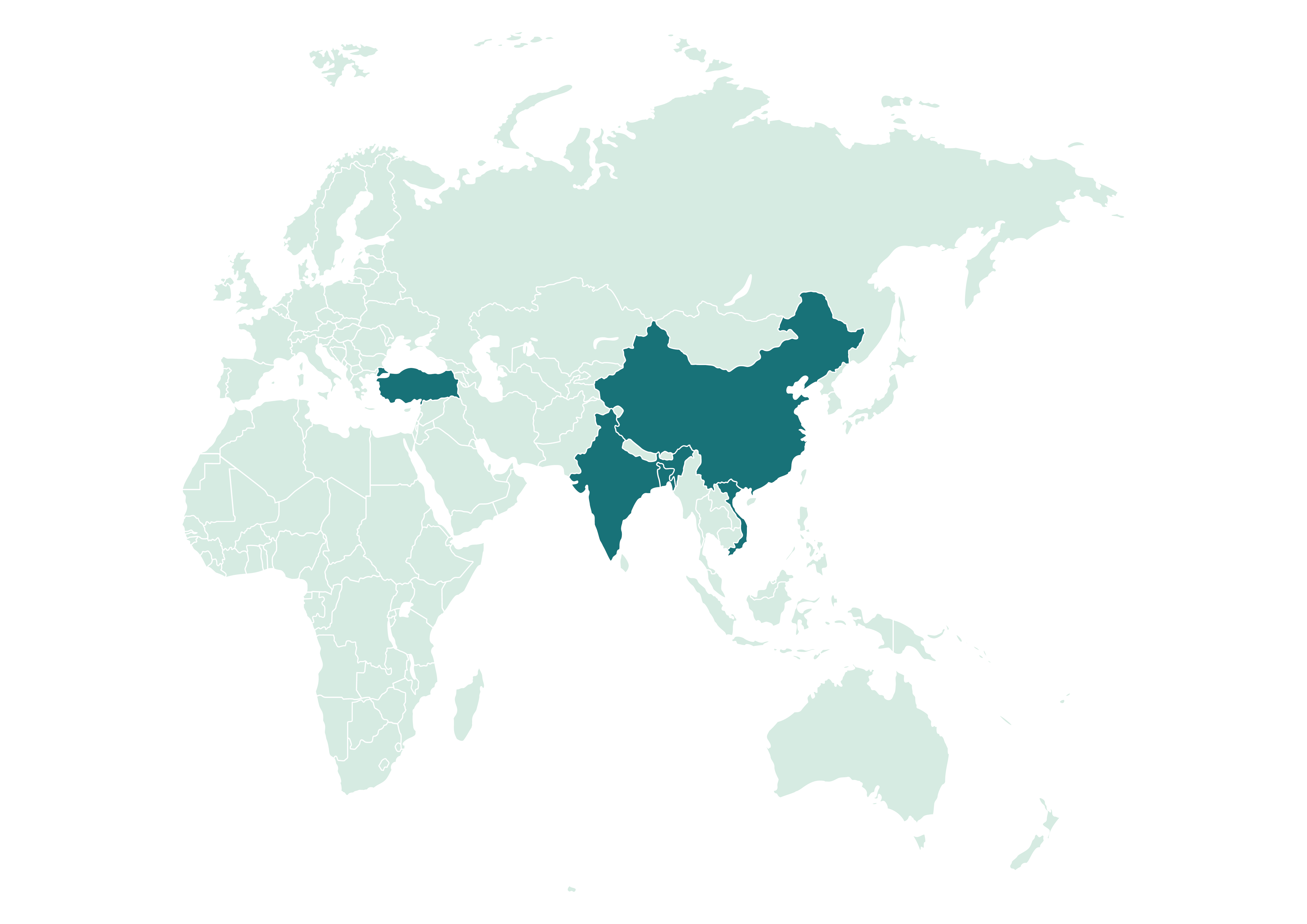
Poor working conditions may occur along the supply chain, particularly in small and medium-sized factories. Undocumented Syrian refugees may be exposed to hazardous working conditions. There may be limited information available on the working conditions of employees, particularly with regard to women.
Restrictions on freedom of association and violations of international standards on freedom of association and the right to collective bargaining may occur. High inflation may contribute to insufficient wage levels. Women may be disproportionately affected, including through gender pay gaps reported in some sources to reach up to 40%. Corruption may take various forms, such as bribery, embezzlement, or nepotism, and may impact regulatory compliance, transparency, and fair business practices.
China’s manufacturing industry is undergoing a period of rapid change and is facing labour shortages. Freedom of association is restricted by law, independent trade unions are not permitted, and there is no legal right to collective bargaining or to strike. Additional labour-related challenges may include low wages, excessive overtime, limited access to social security, and difficulties faced by migrant workers from rural areas. The use of temporary labour and short-term employment contracts is increasing. The resolution of workplace disputes is often limited, and workers may address workplace issues by leaving their employment and seeking alternative job opportunities. Workers in the garment industry are predominantly women, who are often employed in lower-paid positions with limited opportunities for advancement. As a result, women in China earn on average approximately 22% less than men.
Following the collapse of the Rana Plaza building in 2013, safety standards in Bangladesh came under increased scrutiny. In many factories, these standards remain insufficient, which may increase the risk of workplace accidents, fires, and building collapses. Freedom of association is not adequately protected, which may limit the ability of workers to advocate for improved working conditions and higher wages. Excessive overtime and low wages remain ongoing challenges in the sector. The increase in the statutory minimum wage in December 2023 aims to address these issues; however, it may also create a risk of unpaid overtime or non-compliance with minimum wage requirements. Approximately 60% of workers in Bangladesh’s garment industry are women. They may be exposed to discrimination, harassment, and other forms of exploitation. Bangladesh is ranked comparatively low in the World Justice Project’s Rule of Law Index, which may indicate challenges in the enforcement of laws and access to legal protection.
Due to high demand and pressure to produce large quantities, workers may be required to work overtime, which may in some cases remain unpaid. Informal employment arrangements may also be widespread, particularly among seasonal and migrant workers. Workers may be discouraged from joining trade unions, which may limit their ability to improve their working conditions. Many workers receive low wages that may not meet estimates of a living wage. In India, male workers account for approximately 82% of total labour income, while women account for around 18%. Sexual harassment remains a concern and is often underreported. Most garment factories may not have effective mechanisms in place to ensure that gender-related issues are adequately addressed.
The applicable labour law is currently under revision to include provisions aimed at promoting collective bargaining and social dialogue. Excessive overtime, as well as occasional work on Sundays—particularly during peak production periods—may represent key challenges. Many factories operate under piece-rate systems, where income depends significantly on productivity, skills, and overtime. As a result, seasonal fluctuations between peak and low production periods may have a considerable impact on wages. Where trade unions are present, their leadership may in some cases be appointed by factory management, which may result in limited independence. Although the majority of workers in the garment industry are women, they are often employed in lower-paid positions with limited influence. As a consequence, trade union leadership positions are often held by men, and women’s interests may not always be fully represented.
Our Production Sites
Additional information, insights, and visual material from our production facilities are available via the following link.